Varroa Strips
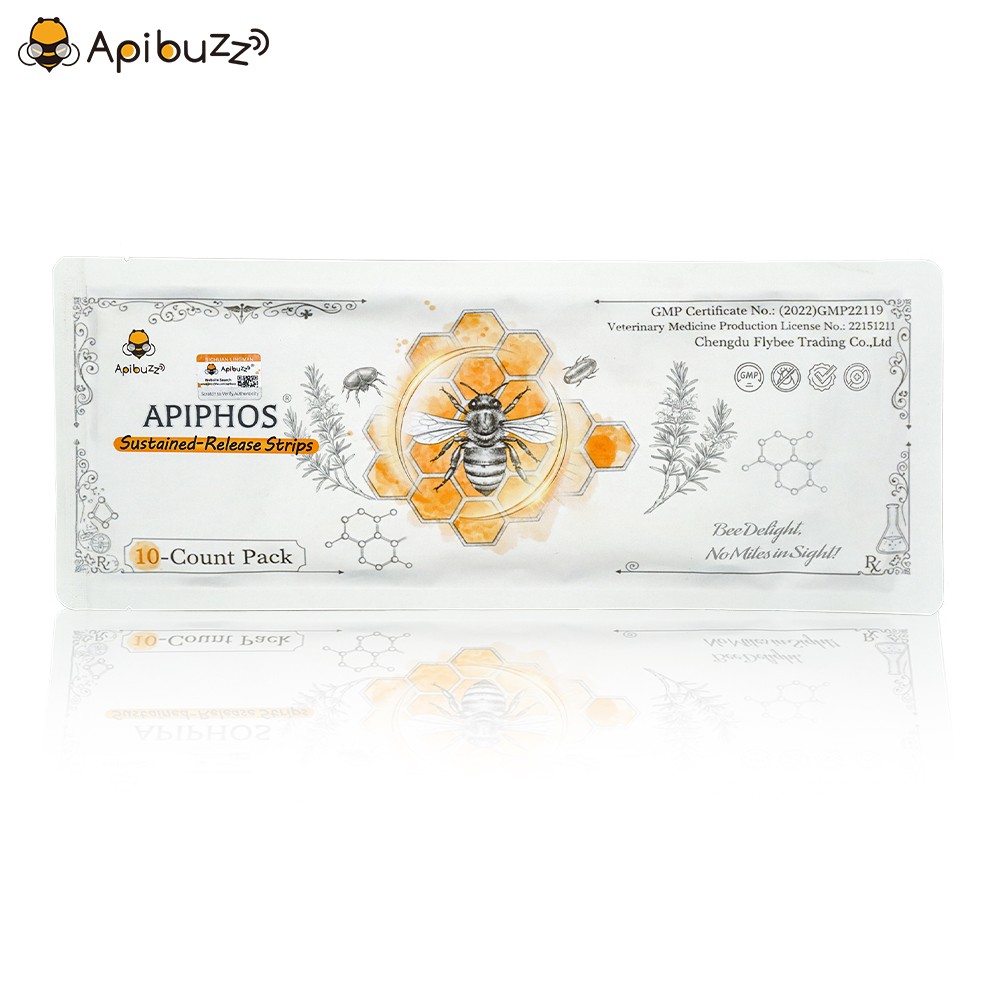
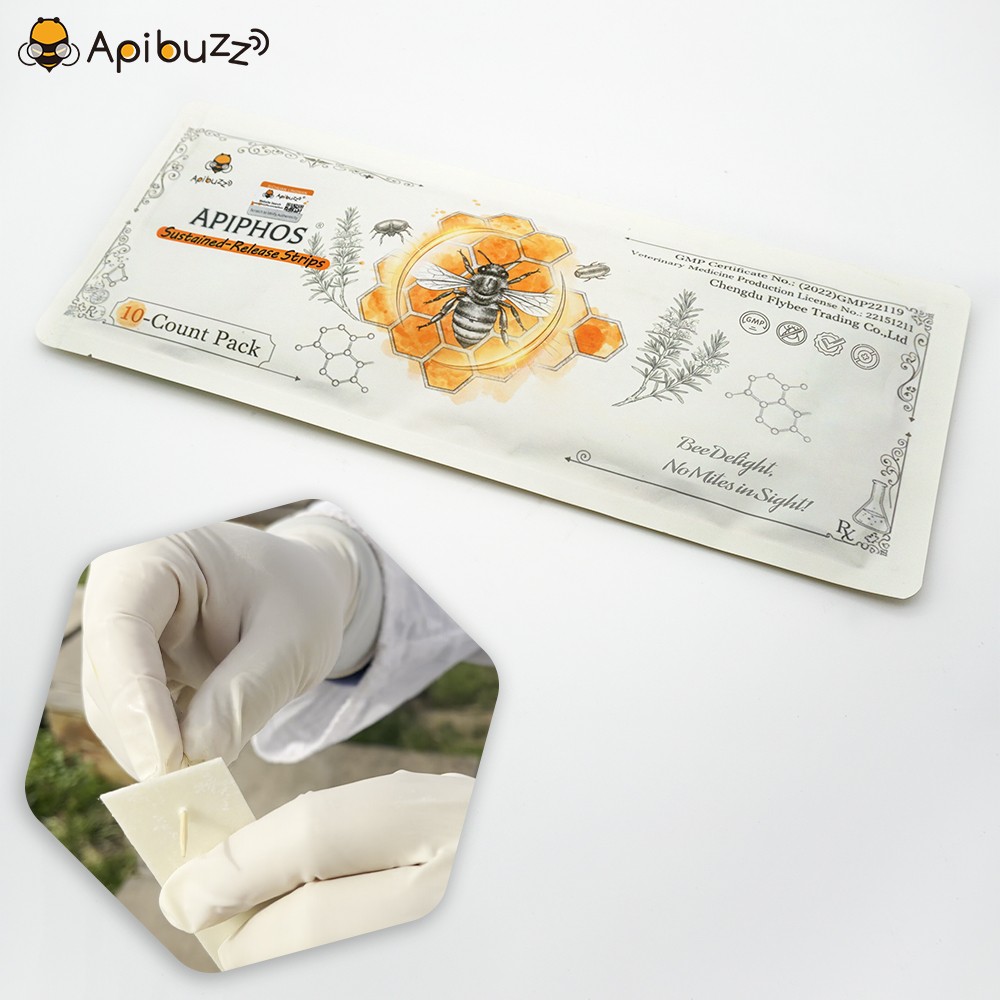
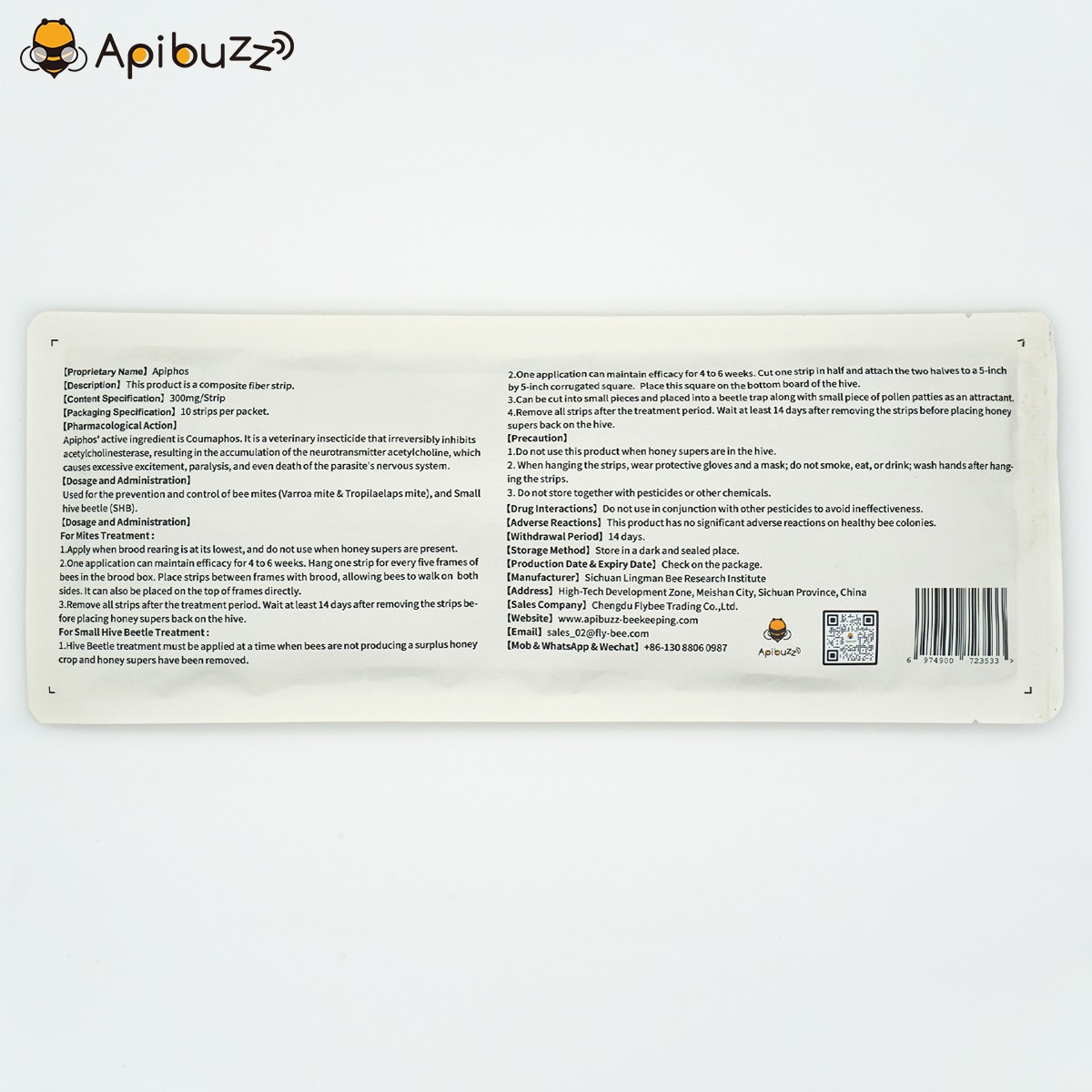
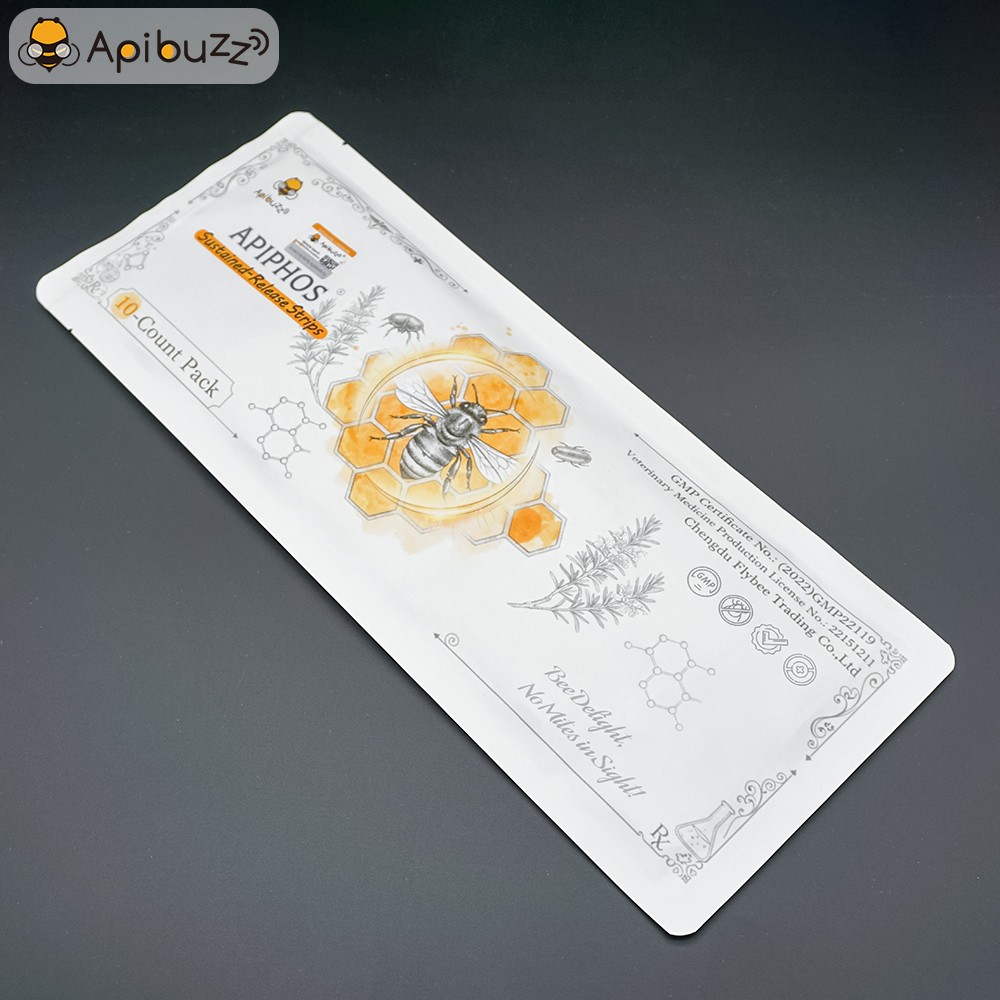
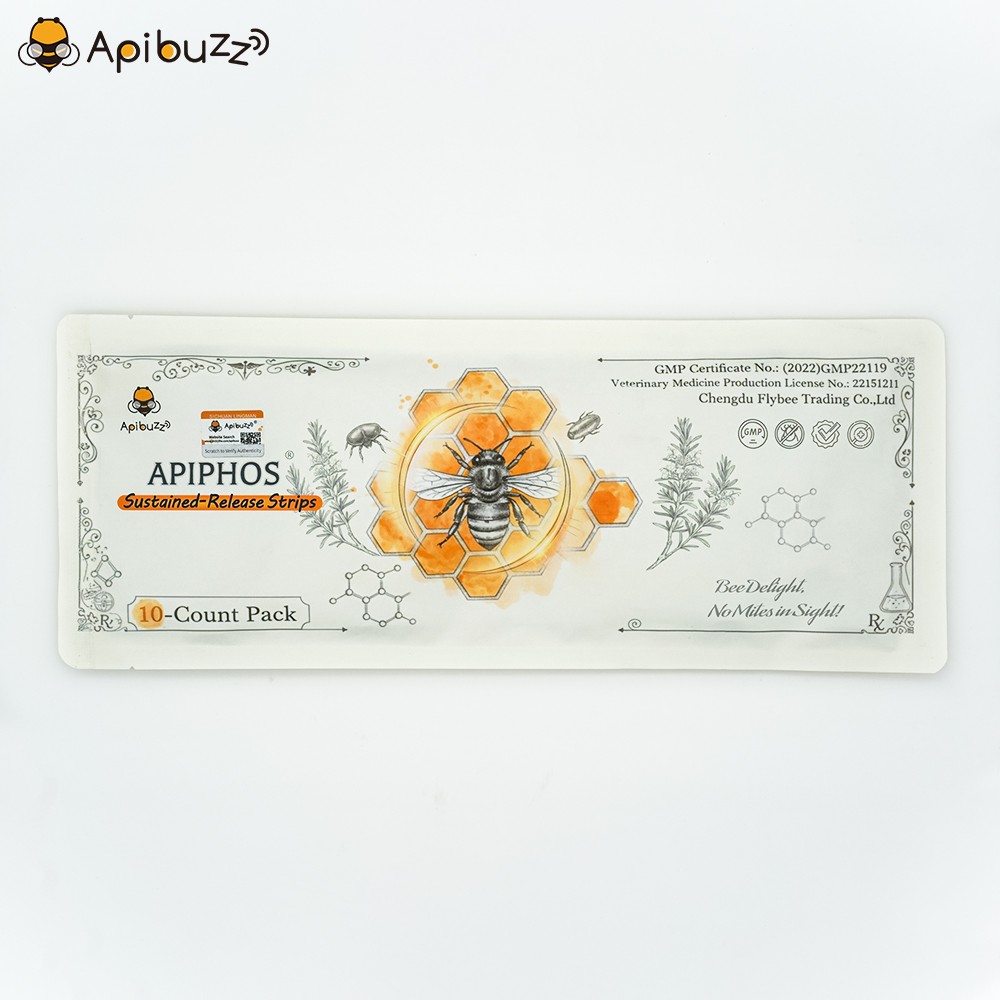
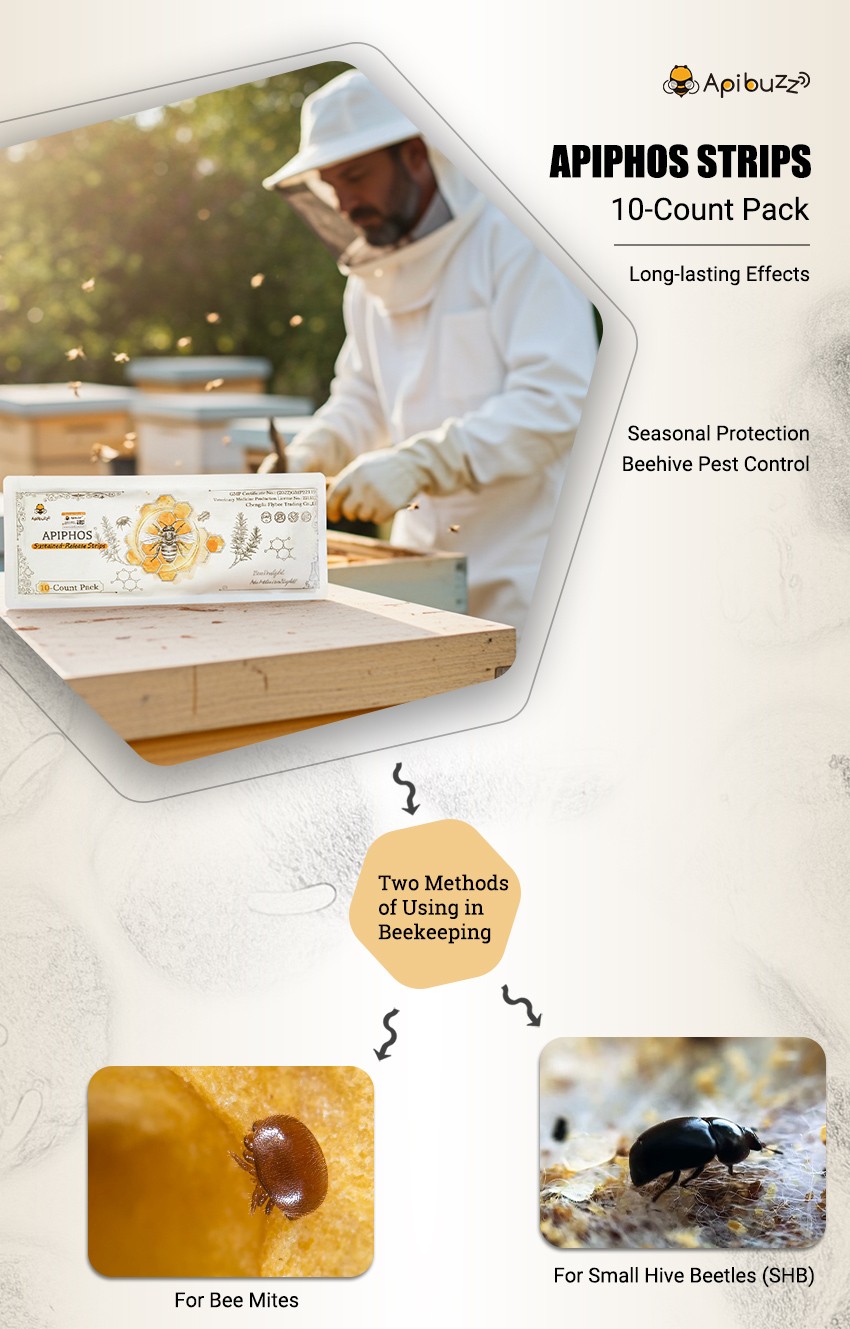
Apiphos Coumaphos Strip
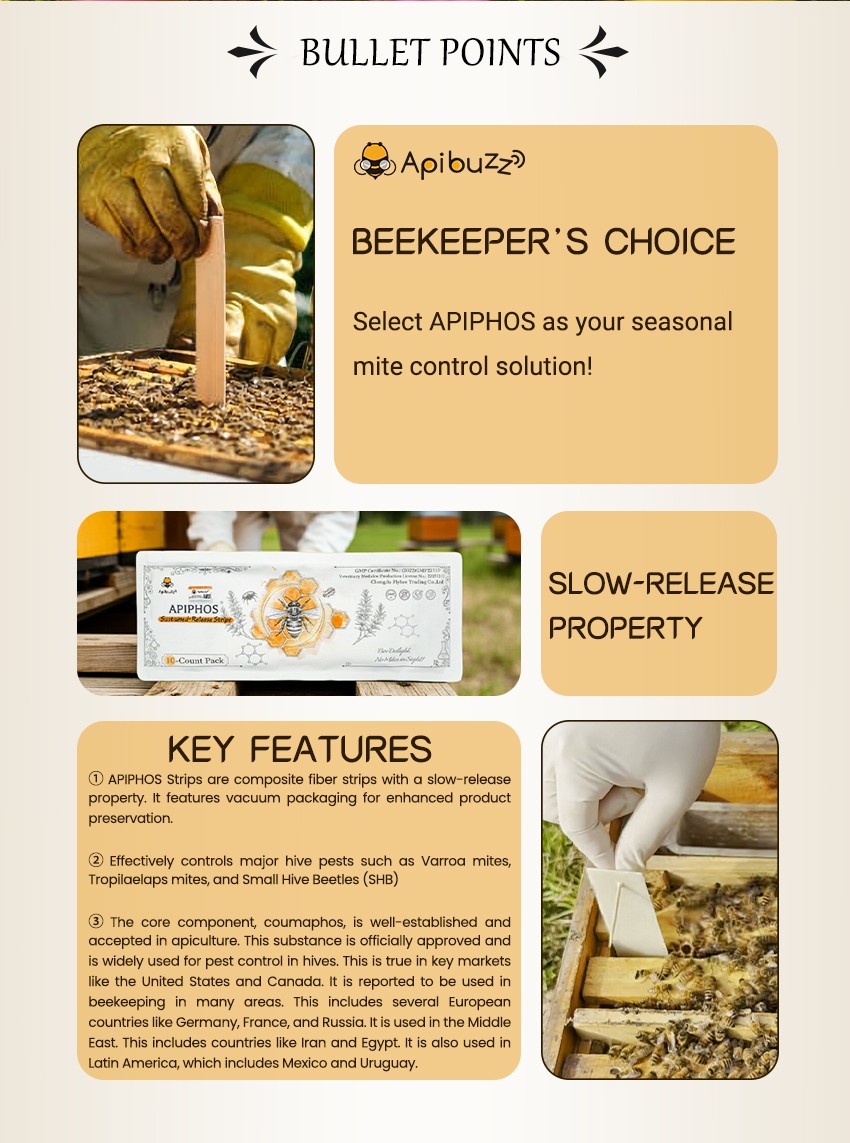
- 【Generic Name】Coumaphos Sustained-Release Strip
【Proprietary Name】Apiphos
【Active Ingredient】Coumaphos
【Description】This product is a composite fiber strip.
【Content Specification】300mg/Strip
【Packaging Specification】10 strips per packet.
【Pharmacological Action】
Coumaphos is a veterinary insecticide that irreversibly inhibits acetylcholinesterase, resulting in the
accumulation of the neurotransmitter acetylcholine, which causes excessive excitement, paralysis, and
even death of the parasite's nervous system.
【Used for】
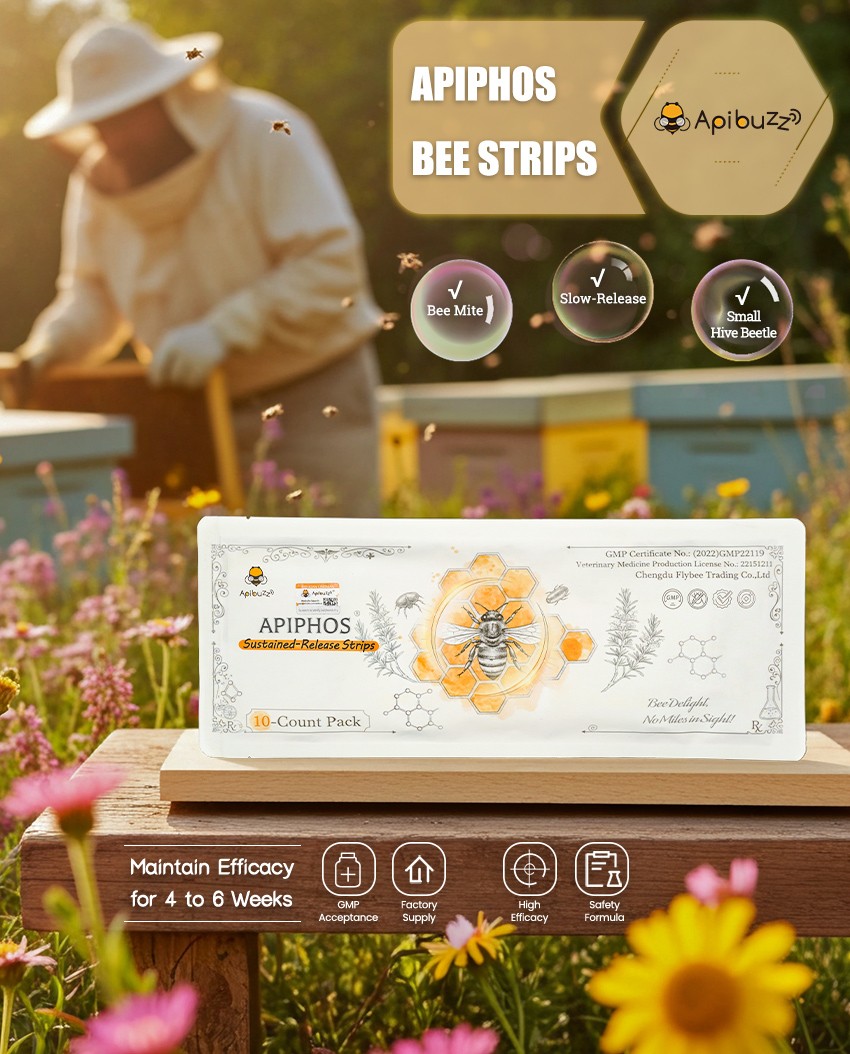
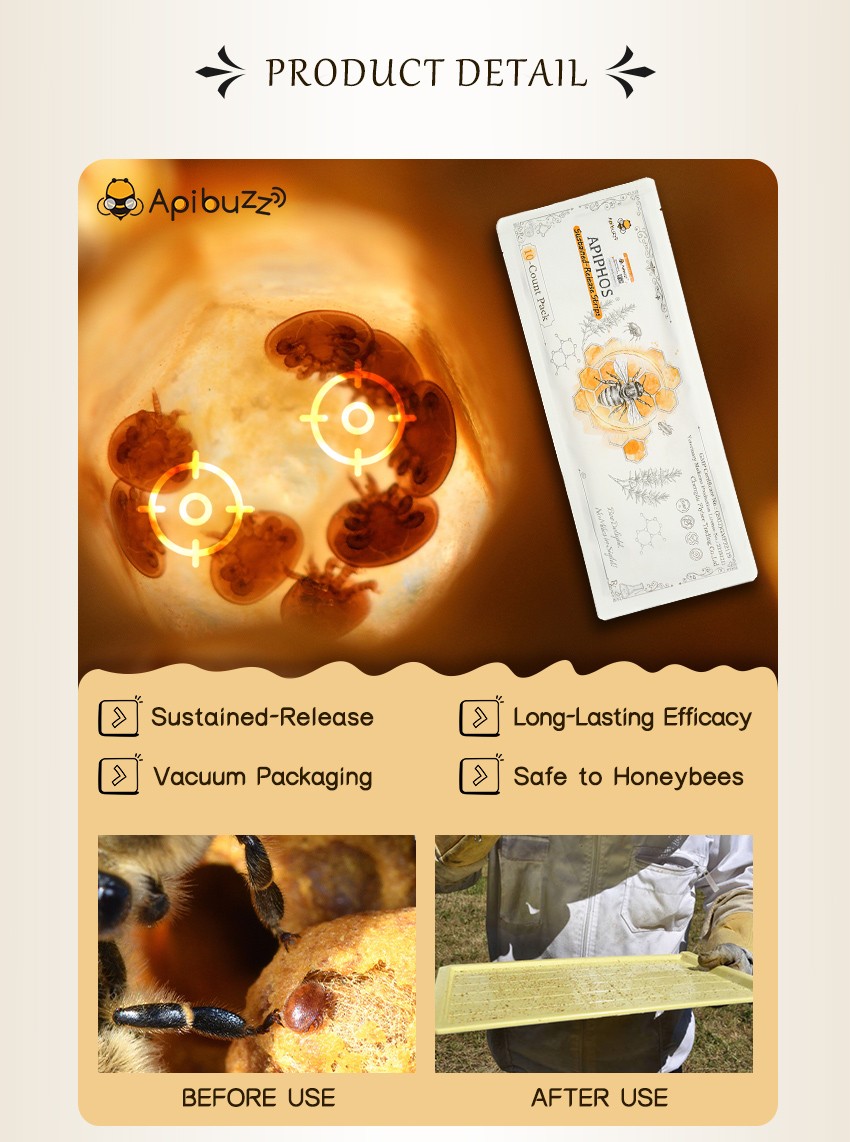
Used for the prevention and control of bee mites (Varroa mite & Tropilaelaps mite), and Small hive beetle
(SHB). - Product description: Contact to buy Apiphos coumaphos strip for varroa mites and small bee hive beetle treatment
- Instant Purchase

【Dosage and Administration】
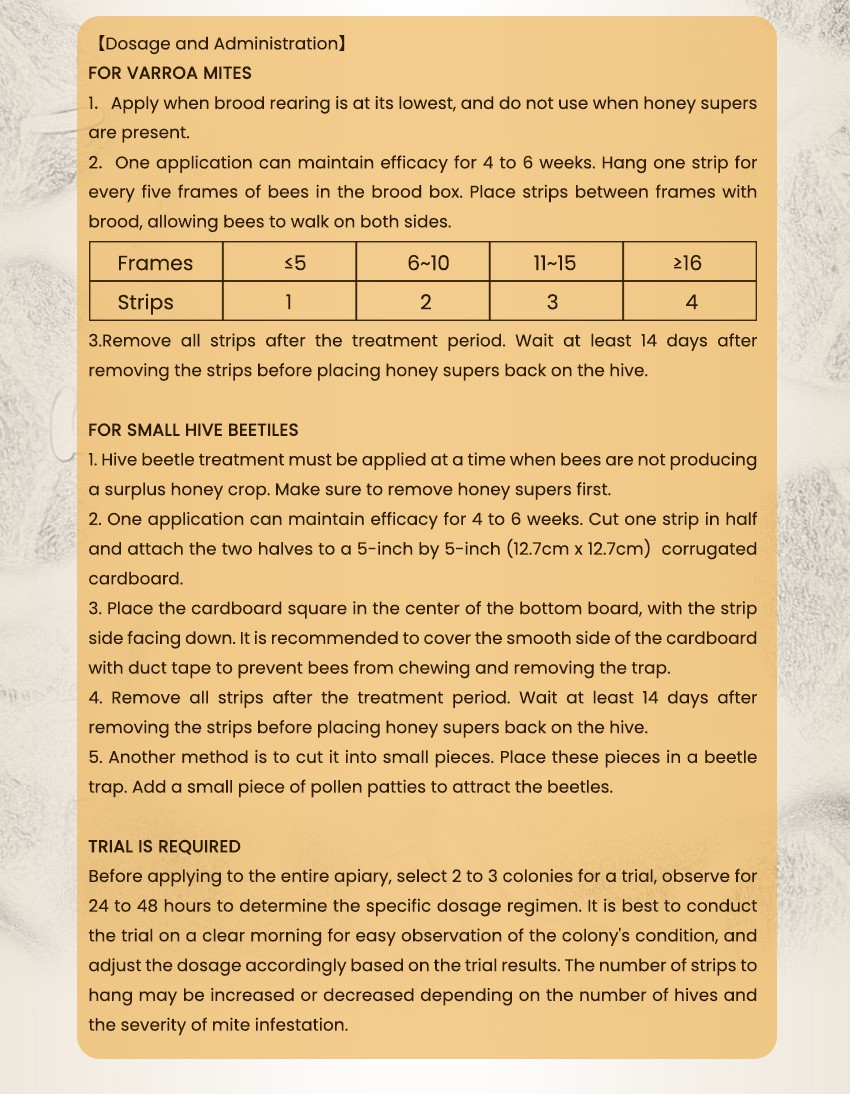
For Varroa Treatment:
1.Apply when brood rearing is at its lowest, and do not use when honey supers are present.
2.One application can maintain efficacy for 4 to 6 weeks. Hang one strip for every 5 frames of bees in the brood box. Place strips between frames with brood, allowing bees to walk on both sides.
3.Remove all strips after the treatment period. Wait at least 14 days after removing the strips before placing honey supers back on the hive.
For Small Hive Beetle Treatment:
1. Hive beetle treatment must be applied at a time when bees are not producing a surplus honey crop. Make sure to remove honey supers first.
2. One application can maintain efficacy for 4 to 6 weeks. Cut one strip in half and attach the two halves to a 5-inch by 5-inch (12.7cm x 12.7cm) corrugated cardboard.
3. Place the cardboard square in the center of the bottom board, with the strip side facing down. It is recommended to cover the smooth side of the cardboard with duct tape to prevent bees from chewing and removing the trap.
4. Remove all strips after the treatment period. Wait at least 14 days after removing the strips before placing honey supers back on the hive.
5. Another method is to cut it into small pieces. Place these pieces in a beetle trap. Add a small piece of pollen patties to attract the beetles.
Before applying to the entire apiary, select 2 to 3 colonies for a trial, observe for 24 to 48 hours to determine the specific dosage regimen. It is best to conduct the trial on a clear morning for easy observation of the colony's condition, and adjust the dosage accordingly based on the trial results. The number of strips to hang may be increased or decreased depending on the number of hives and the severity of mite infestation.
【Precaution】
1.Do not use this product when honey supers are in the hive.
2. Do not use this product when the temperature falls below 15 degrees Celsius. Or the bee colony is in abnormal conditions such as sugar deficiency, bee colony relocation, initial colony establishment, or other abnormal situations.
3. When hanging the strips, wear protective gloves and a mask; do not smoke, eat, or drink; wash hands after hanging the strips.
4. Do not store together with pesticides or other chemicals.
【Drug Interactions】Do not use in conjunction with other pesticides to avoid ineffectiveness.
【Adverse Reactions】This product has no significant adverse reactions on healthy bee colonies.
【Withdrawal Period】14 days.
【Storage Method】Store in a dark and sealed place.
【Production Date & Expiry Date】Check on the package.
【Shelf Life】3 Years
【Manufacturer】Sichuan Lingman Bee Research Institute
【Address】High-Tech Development Zone, Meishan City, Sichuan Province, China
【Sales Company】chengdu flybee Trading Co.,Ltd.
【Website】www.apibuzz-beekeeping.com
【Email】sales_02@fly-bee.com
【Mob & WhatsApp & Wechat】+86-130 8806 0987
Apiphos Safety Protection and First Aid Guidelines:
Although Apiphos contains subtle coumaphos, beekeepers should avoid direct contact with it, as it can cause neurotoxicity over time. Specifically, we should avoid skin contact and adsorption. We have set the following guidelines:
Core Protection Before Operation of Apiphos
1. You must wear nitrile or rubber gloves. Leather or fabric gloves are prohibited because they can absorb the content easily.
2. To protect your skin, wear long-sleeved shirts and long pants. Smoking, eating, or scratching your eyes is strictly prohibited while applying the treatment.
3. Timing: Do not use during honey harvesting when honey supers are installed in the brood frames. You can put the honey supers back on the hive at least 14 days after treatment.
3-Step First Aid when you get direct exposure to Apiphos
1. Remove and wash any affected clothing immediately. Wash your skin with soap and cold water for 15 minutes since cold water slows down absorption.
2. Check your pupils: If you observe pinpoint pupils, drooling, nausea, or muscle spasms, you may have been poisoned.
3. Seek medical help immediately. Clearly tell the doctor that you were exposed to the substance and may be experiencing poisoning symptoms. The doctor may prescribe atropine. Alternatively, you might prepare these medications ahead of time to prevent poisoning.
 Send Email
 WhatsApp